How to Fix Battery Drain from Display on Galaxy Z Flip 5
The Galaxy Z Flip 5 packs two OLED displays into one pocketable device — a 6.7-inch main screen and a 3.4-inch Flex Window cover screen — and either one can become a major source of battery drain. The most impactful culprit is almost always the 120Hz adaptive refresh rate on the main display, which independently costs around 2 hours of battery life compared to 60Hz mode. Display brightness, cover screen activity, and power-hungry apps running in the background round out the top causes.
This guide covers every display-related battery fix for the Z Flip 5 running One UI 6, One UI 6.1, and One UI 7 (as of 2026), starting with the changes that make the biggest measurable difference.
Switch to Standard 60Hz Refresh Rate
This is the single most impactful display setting you can change. The Z Flip 5’s main screen defaults to Adaptive mode, which pushes refresh rate up to 120Hz for smoother scrolling. Testing by GSMArena and Tech ARP shows Adaptive mode delivers around 9 hours of screen-on time, while switching to Standard (60Hz) mode extends that to over 11 hours — a gain of roughly 21% or 2 full hours. If your battery is draining noticeably fast, start here.
To switch to Standard 60Hz mode:
- Open Settings.
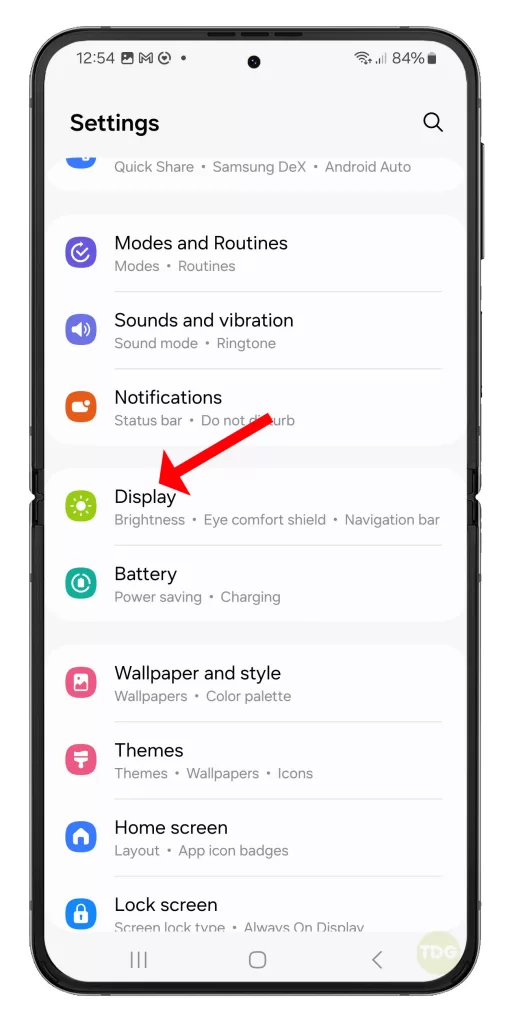
- Tap Display.
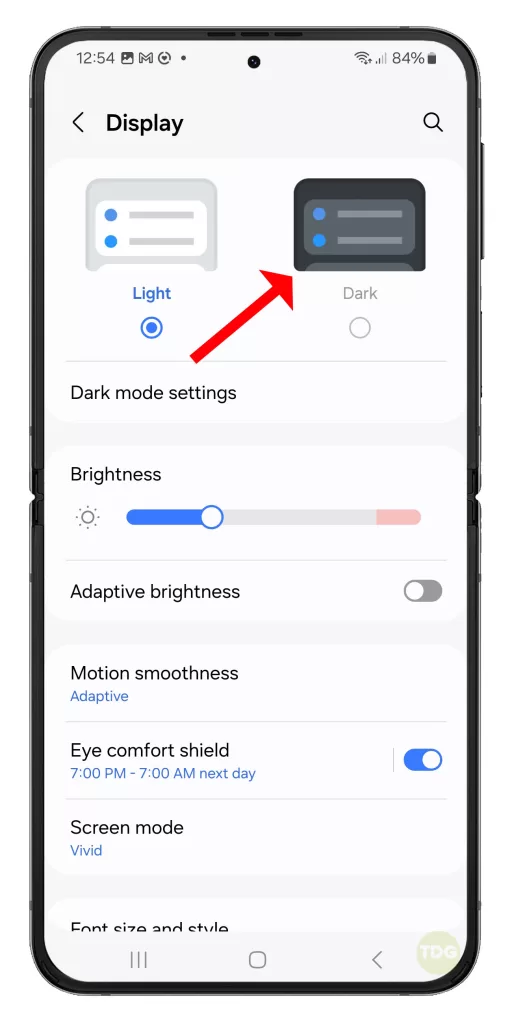
- Tap Motion smoothness.
- Select Standard (60Hz) instead of Adaptive.
- Tap Apply.
You’ll still get perfectly smooth video playback; the difference in everyday scrolling is minimal for most users. If you prefer to keep Adaptive on, pair it with auto-brightness and a lower max brightness ceiling to partially offset the power draw.
Lower Screen Brightness and Enable Adaptive Brightness
The Z Flip 5’s 6.7-inch OLED is bright — up to 1750 nits in outdoor mode — and running it near maximum brightness indoors is one of the fastest ways to drain the 3700 mAh battery. Keeping brightness at 40–60% in typical indoor conditions makes a noticeable difference.
To adjust brightness and enable Adaptive Brightness:
- Open Settings.
- Tap Display.
- Drag the Brightness slider to your preferred level.
- Toggle on Adaptive brightness so the phone automatically adjusts based on ambient lighting.
Adaptive brightness also helps in dark environments — it dims the screen automatically, saving even more power than a manually set mid-level brightness would in varied lighting conditions.
Enable Dark Mode
The Z Flip 5 uses OLED panels on both screens — OLED technology only lights active pixels, which means truly dark or black areas consume almost no power. Switching from Light to Dark mode measurably reduces display power consumption, particularly if you use apps with white backgrounds frequently (Gmail, Chrome, Messages, etc.).
To enable Dark mode:
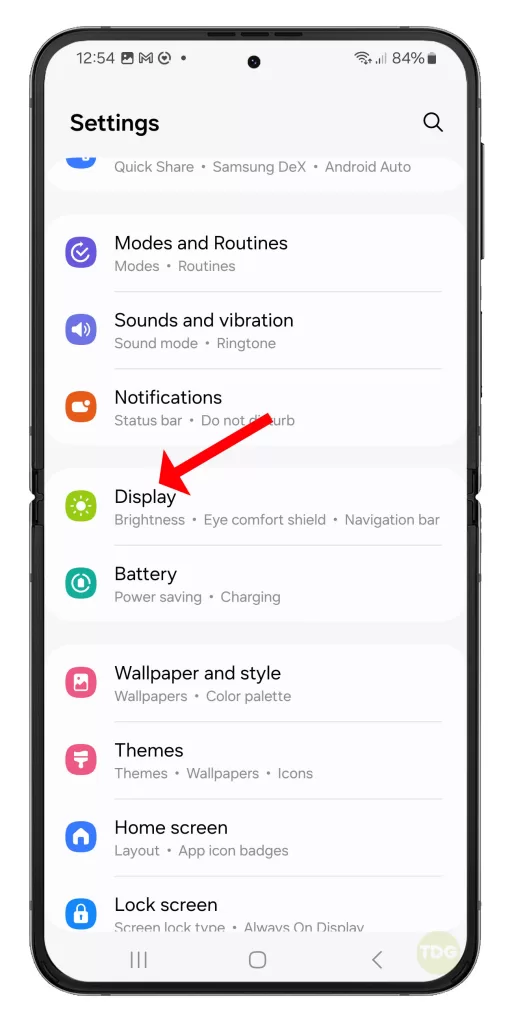
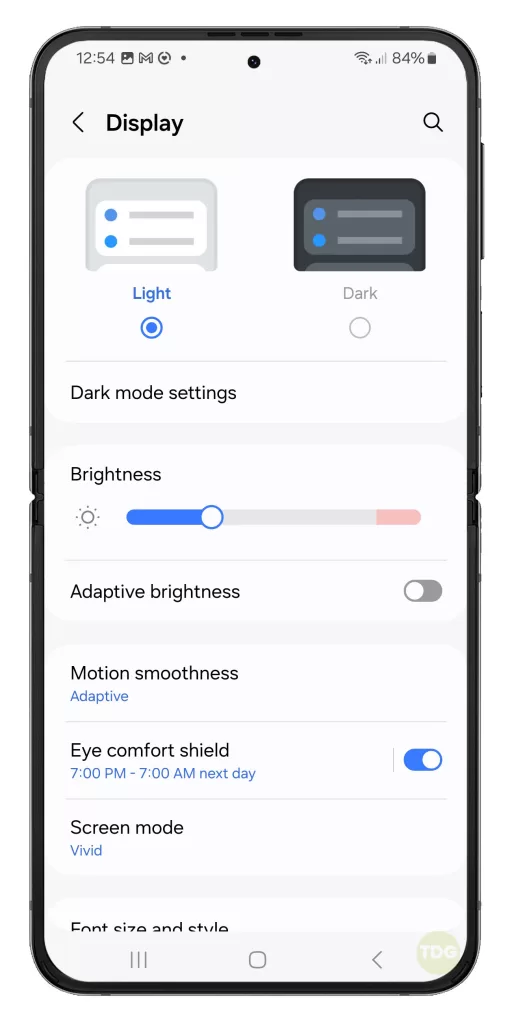
- Open Settings.
- Tap Display.
- Under Brightness, select Dark.
You can also schedule Dark mode to turn on at sunset automatically: go to Settings → Display → Dark mode settings and enable Turn on as scheduled. This way you get the battery benefit during evening and nighttime use while keeping Light mode during the day when you need maximum screen visibility.
Manage the Flex Window Cover Screen
The Flex Window is one of the Z Flip 5’s standout features, but it’s also a display that can stay active well beyond what’s needed. Every time you glance at a notification, the 3.4-inch OLED cover screen lights up. Widgets refreshing in the background — especially the battery widget showing connected Bluetooth devices — add up over the course of a day.
To reduce cover screen battery impact:
- Open Settings.
- Tap Cover screen.
- Tap the Cover screen toggle at the top to review active features.
- Tap Widgets and disable any widgets you don’t actively use.
- For the battery widget specifically: tap Battery status, then tap the minus icon to remove the multi-device version, and instead add Battery status (circles) 1×1 — then disable Automatically choose device to show. This stops it from polling connected Bluetooth devices continuously.
- Tap Cover screen timeout and set it to 5 seconds or the shortest option available.
If you rarely use the cover screen for anything beyond time and notifications, consider reducing the number of active widgets to just the clock. Fewer refreshing widgets means fewer wake events throughout the day.
Set Screen Timeout to 15 or 30 Seconds
Every second your main display stays on unnecessarily burns battery. The default 1-minute screen timeout means the Z Flip 5’s 6.7-inch screen can stay lit for up to 60 seconds after you set the phone down. Cutting this to 15 or 30 seconds reduces idle display drain without disrupting everyday use.
To change screen timeout:
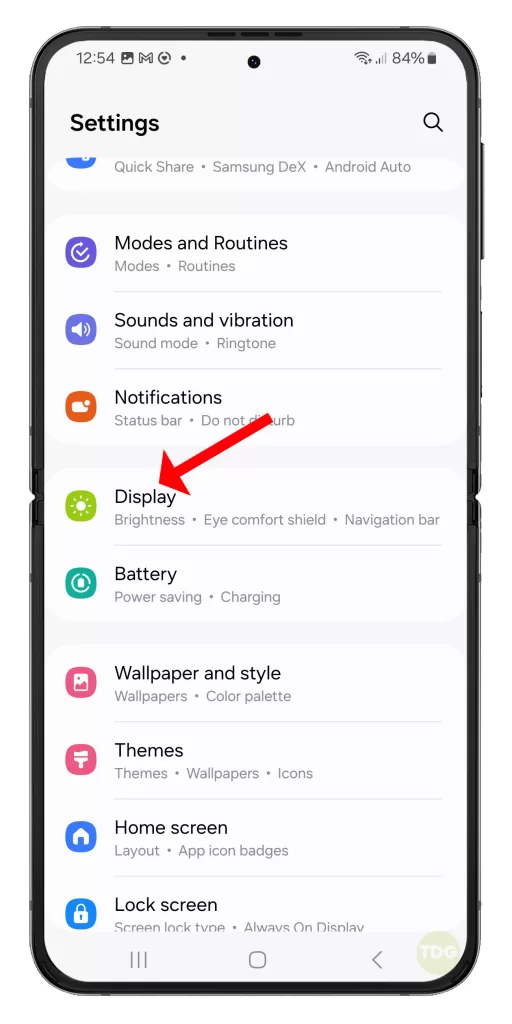
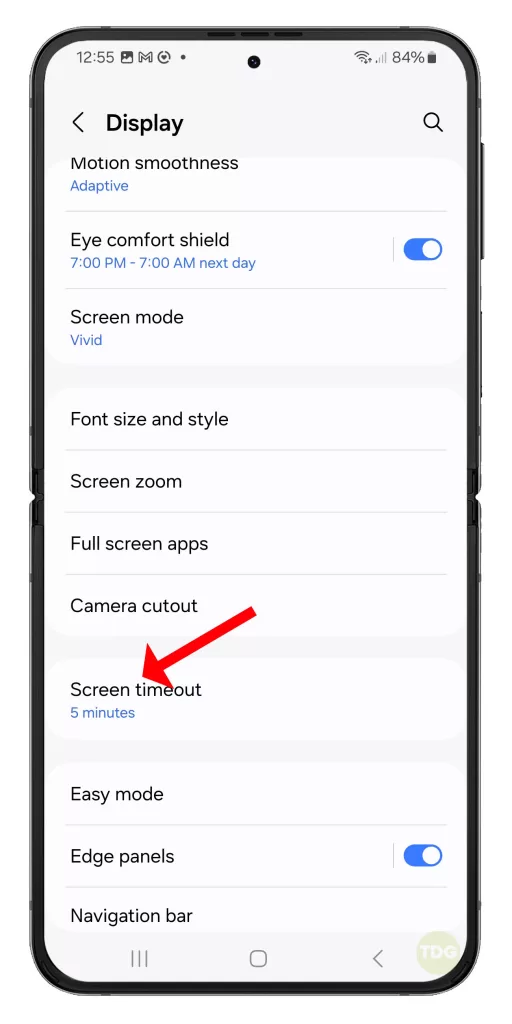
- Open Settings.
- Tap Display.
- Tap Screen timeout.
- Select 15 seconds or 30 seconds.
Note: if you frequently read long articles or reference content on your screen, 30 seconds is the better balance. For users who primarily use the phone for quick checks and messaging, 15 seconds is ideal.
Disable Dynamic Wallpapers
Animated and dynamic wallpapers look sharp on the Z Flip 5’s OLED display, but they require continuous GPU rendering every time the screen turns on or animates. On an OLED screen, animated bright wallpapers are among the least efficient display states — they combine high brightness, color variety, and motion, all of which draw power.
To switch to a static wallpaper:
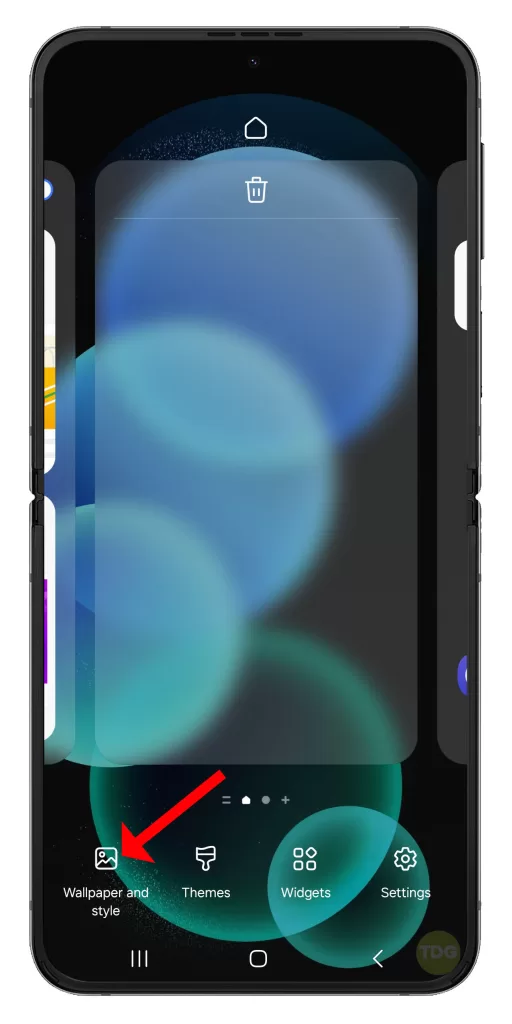
- Long-press on the home screen.
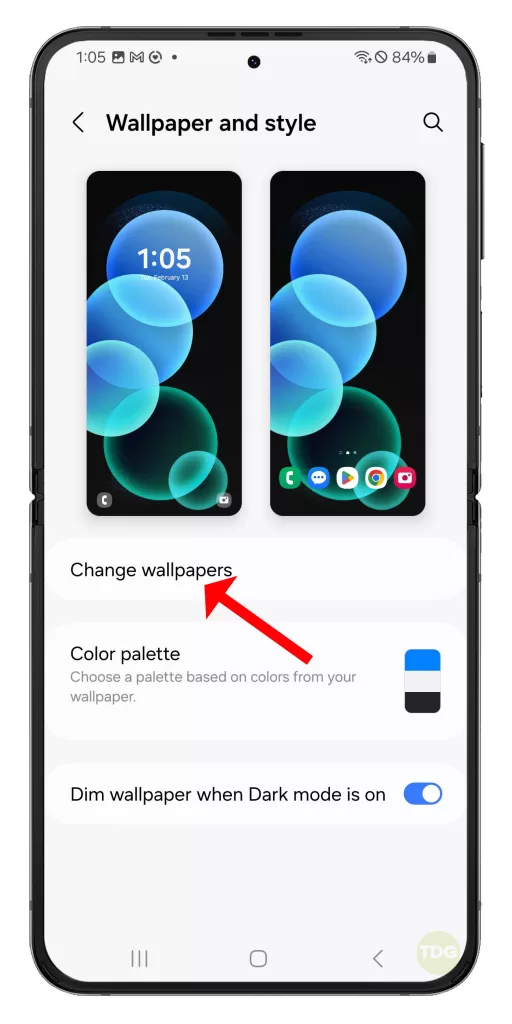
- Tap Wallpaper and style.
- Select My wallpapers or choose a still photo from your gallery.
- Apply a dark or predominantly black static wallpaper for maximum OLED benefit.
If you prefer a live wallpaper aesthetic, Samsung’s built-in static wallpapers with subtle dark tones (such as the default Galaxy abstract backgrounds) look great while consuming far less power than animated alternatives.
Disable Unnecessary Connectivity Features
Wi-Fi, Bluetooth, and mobile data all contribute to battery drain when active but not in use. While these connections don’t draw power at the same rate as the display, they compound the total drain — particularly Bluetooth, which maintains a persistent radio scan when active devices are paired.
Quick ways to manage connectivity on the Z Flip 5:
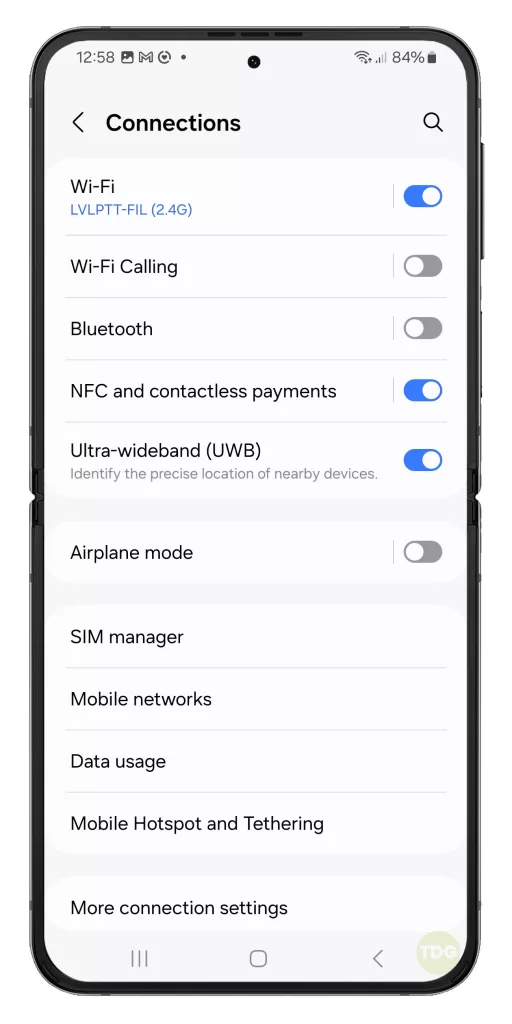
- Wi-Fi: Swipe down twice to open Quick Settings, then tap the Wi-Fi tile to toggle off when away from home or the office.
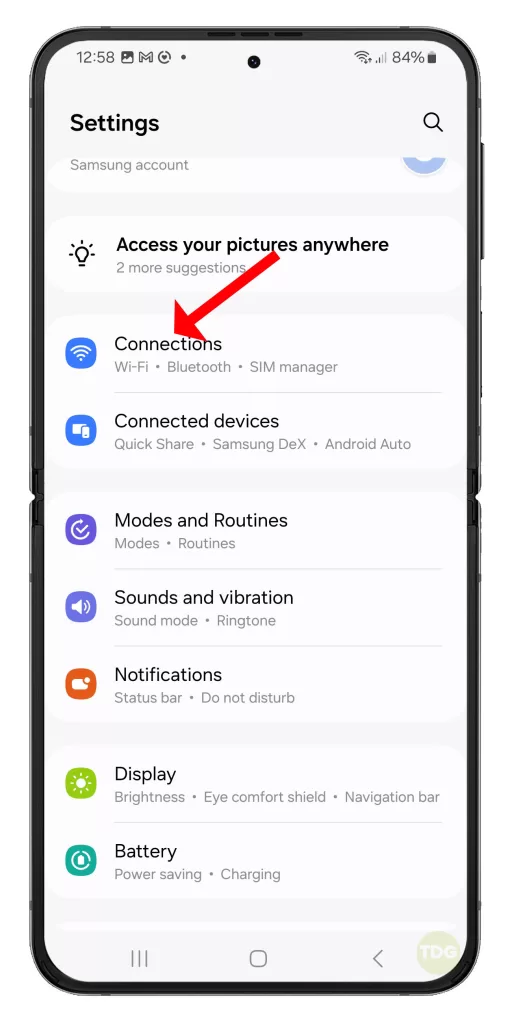
- Bluetooth: Toggle off when no headphones or devices are paired. Go to Settings → Connections → Bluetooth for granular control over paired devices.
- Mobile hotspot: Verify it’s off at Settings → Connections → Mobile Hotspot and Tethering. An inadvertently active hotspot can drain the battery in hours.
- 5G: If you’re in a weak 5G coverage area, switching to LTE can reduce radio power drain. Go to Settings → Connections → Mobile networks → Network mode and select LTE/3G/2G (auto connect).
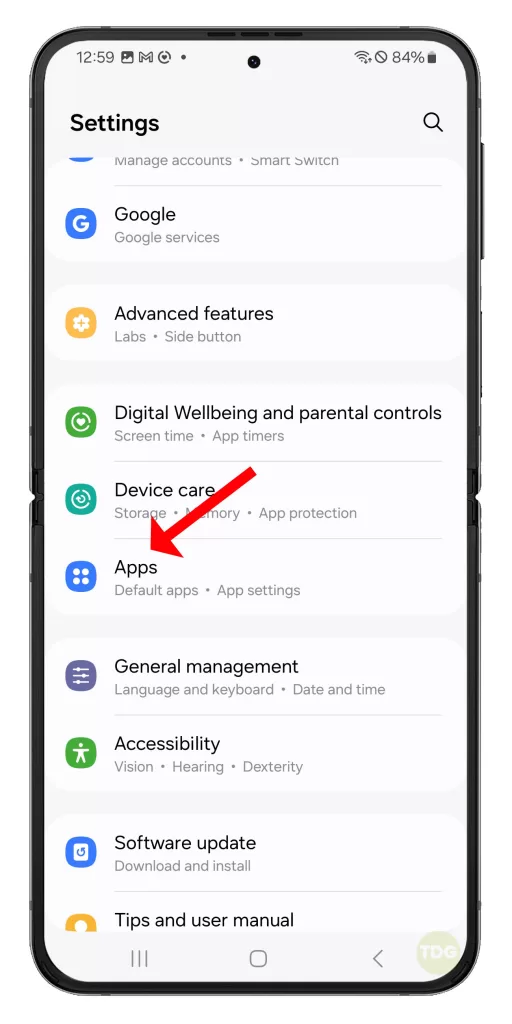
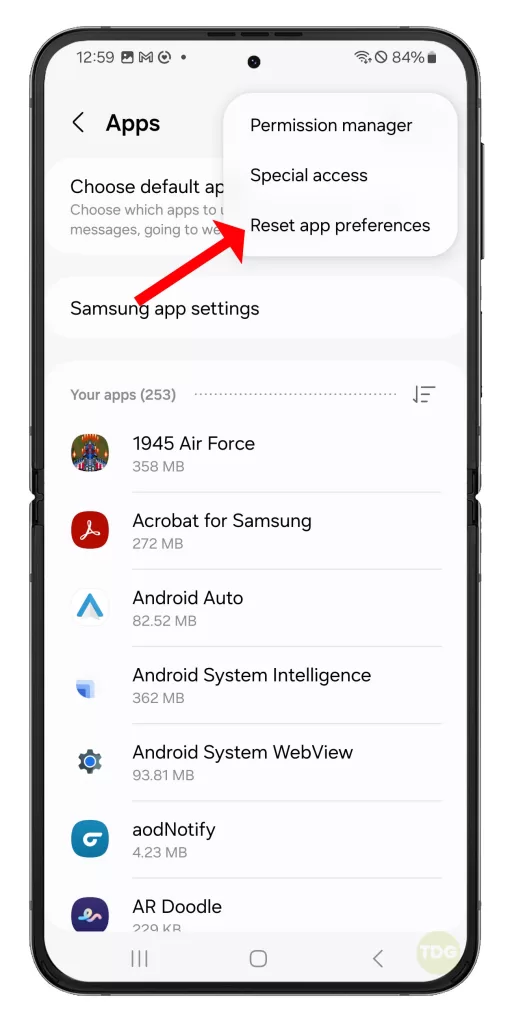
Manage Location Services
GPS and location services are among the heavier background drains on the Z Flip 5. Apps that continuously poll location — weather apps, fitness trackers, delivery apps, social media — keep the GPS radio active throughout the day. One UI makes it easy to audit which apps are doing this.
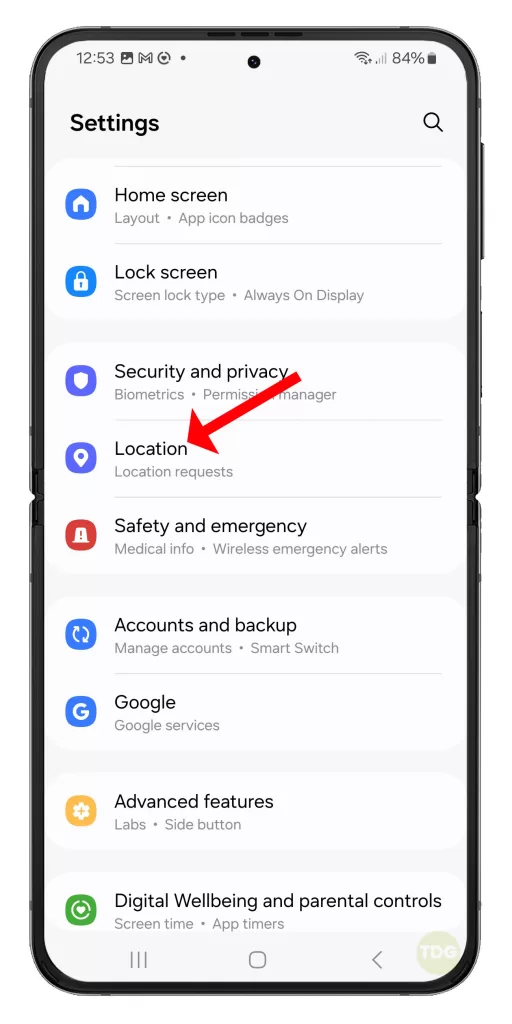
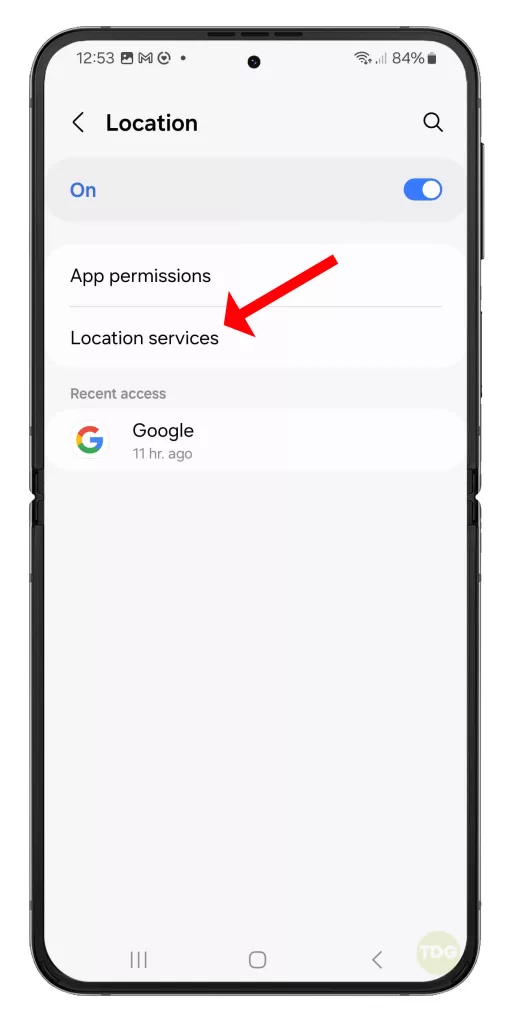
To review and limit location access:
- Open Settings.
- Tap Location.
- Tap App permissions.
- Review any app set to Allow all the time. Change non-essential apps (social media, shopping apps, etc.) to Only while using the app or Ask every time.
- Also tap Improve accuracy and consider disabling Wi-Fi scanning and Bluetooth scanning if you don’t need them.
Optimize App Usage and Background Activity
Apps running in the background — even when you’re not using them — can keep the processor active and prevent deep sleep states, which drives up display-adjacent battery drain. On One UI 7, Samsung’s Adaptive Battery feature handles most of this automatically, but you may have apps it hasn’t learned to restrict yet.
To check and limit background app activity:
- Open Settings.
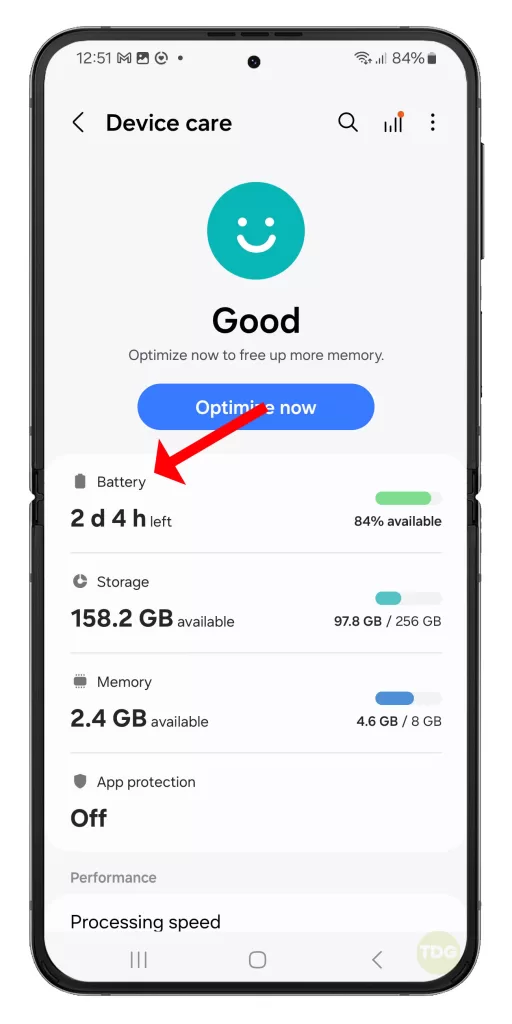
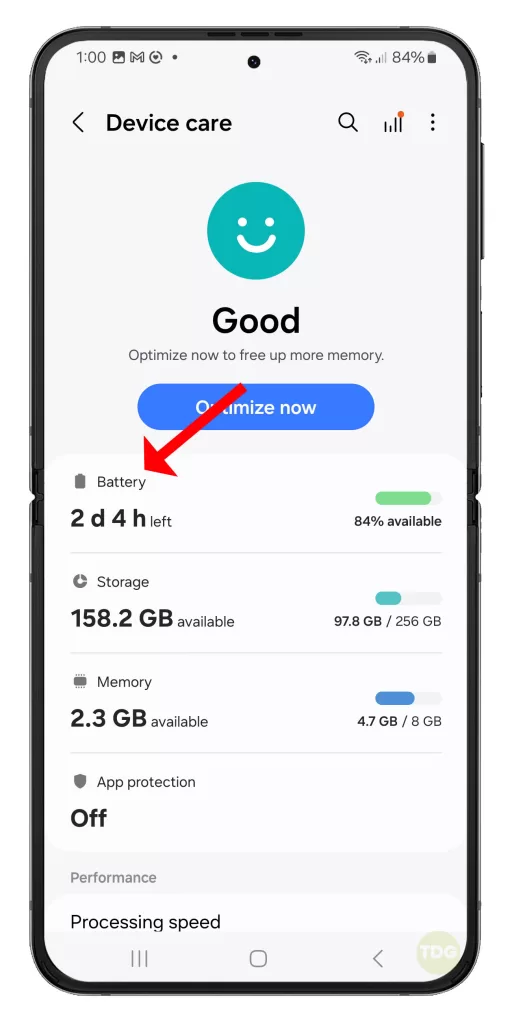
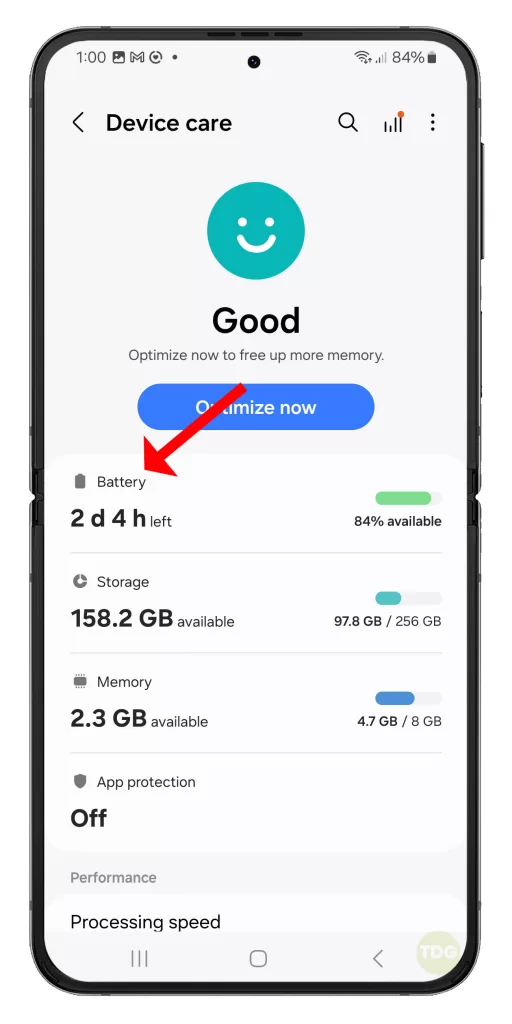
- Tap Battery and device care.
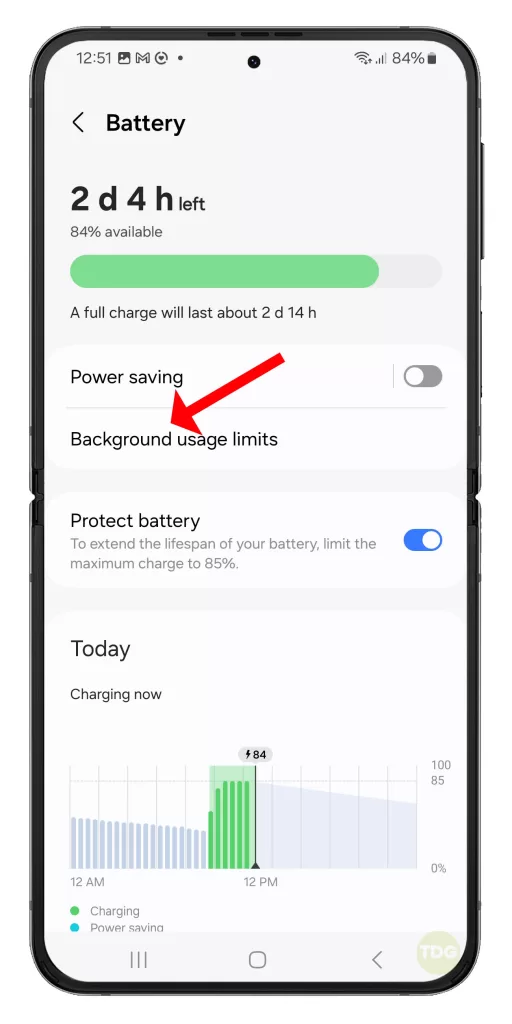
- Tap Battery.
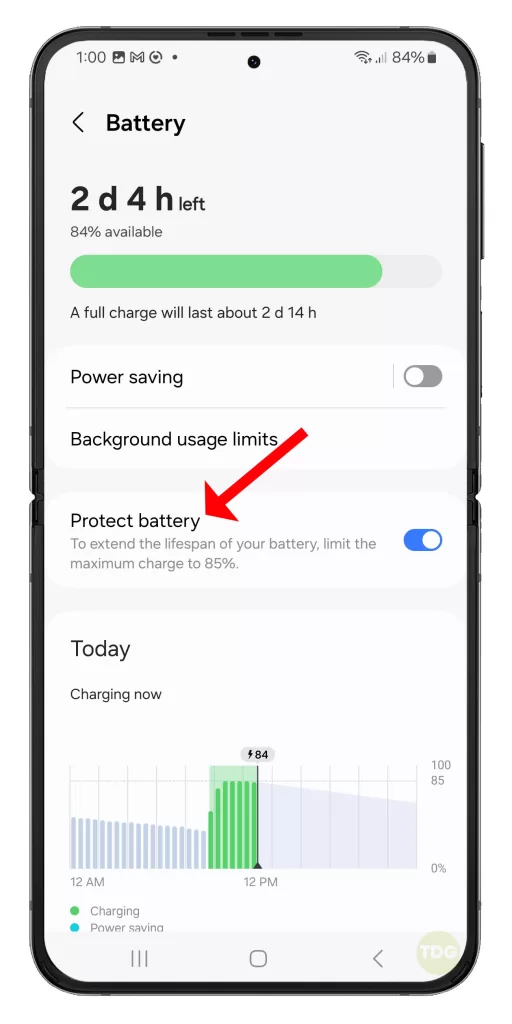
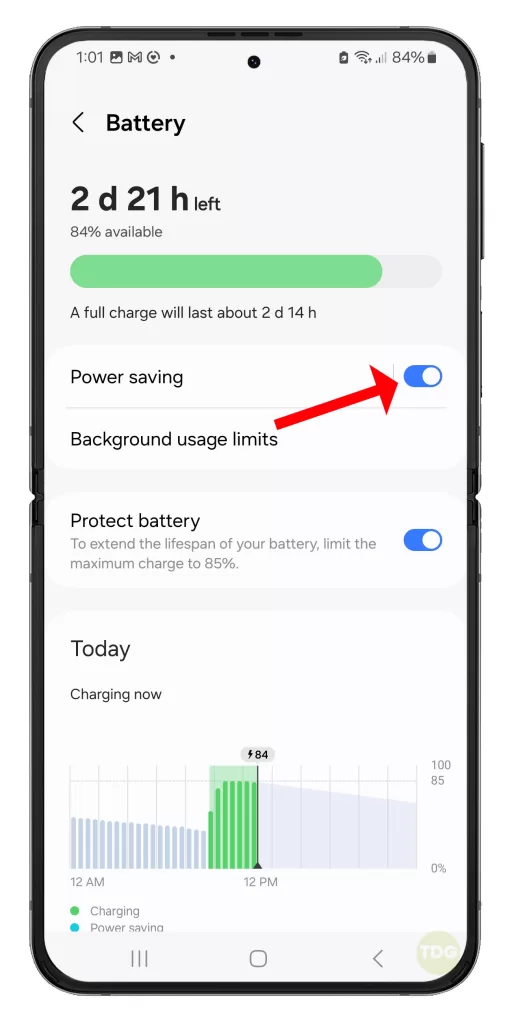
- Tap Background usage limits.
- Under Sleeping apps, verify that non-essential apps are listed. You can manually add apps by tapping the + icon.
- Enable Adaptive battery if it isn’t already — this uses on-device AI to learn your habits and restrict apps you rarely open.
Also check the battery usage breakdown: go to Settings → Battery and device care → Battery → Battery usage and look for any unexpected high-usage apps. If a social media or utility app is consuming more than 10–15% of your battery, force-stop it and consider clearing its cache at Settings → Apps → [App name] → Storage → Clear cache.
Check for Software Updates
Software bugs are a documented cause of battery drain on the Z Flip 5. The One UI 6.1 update (released March 2024) caused significant battery drain for many Z Flip 5 owners, with devices consuming power at nearly double the normal rate. Samsung’s June 2025 security patch for One UI 7 specifically addressed a battery drain bug that had been reported widely since the One UI 7 rollout. If you’re on an outdated build, installing the latest update may resolve your battery issues without any other changes.
To check for updates:
- Open Settings.
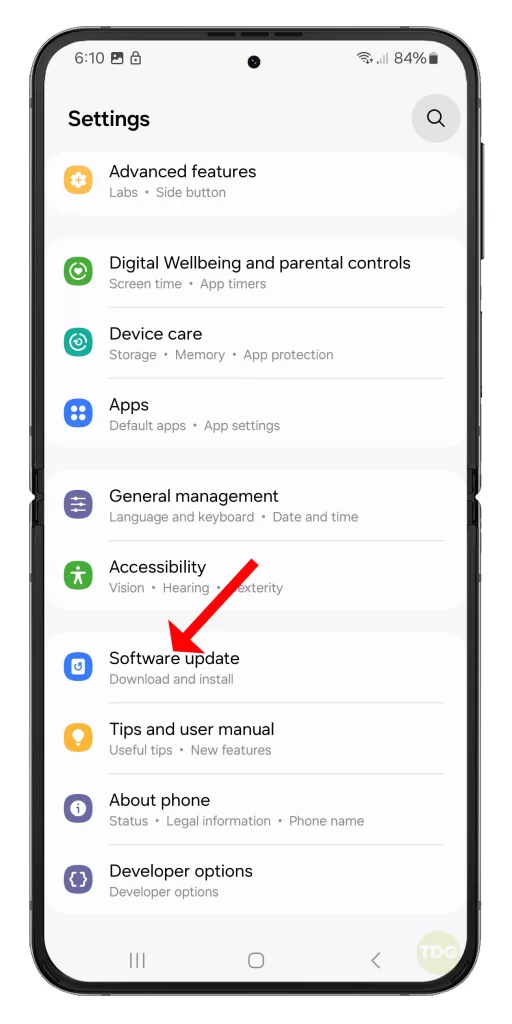
- Scroll down and tap Software update.
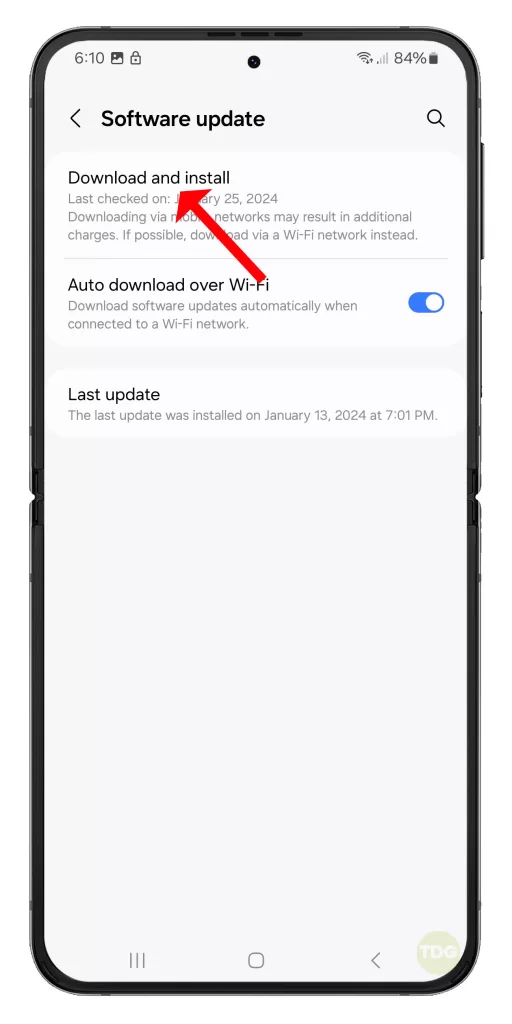
- Tap Download and install.
- If an update is available, install it and give the phone 24–48 hours to re-optimize — the initial post-update period often includes elevated battery use as the system re-indexes and recalibrates Adaptive Battery.
Enable Power Saving Mode
When you need to stretch battery life on a long day out, Power Saving mode is the fastest single-toggle fix. On the Z Flip 5, it reduces the CPU clock speed, lowers maximum screen brightness, limits background network activity, and restricts some display effects. You can expect to extend remaining battery life by 20–30% in Power Saving mode depending on usage patterns.
To enable Power Saving mode:
- Open Settings.
- Tap Battery and device care.
- Tap Battery.
- Tap Power saving and toggle it on.
Alternatively, swipe down twice to open the full Quick Settings panel and tap the Power saving tile directly. One UI also offers a more aggressive Maximum Power saving mode, which restricts the phone to a minimal interface and disables most background activity — useful when you’re below 10% and need the phone to last a few more hours.
Monitor Battery Health
Lithium-ion batteries degrade over time, and a Z Flip 5 battery at 80% health will drain noticeably faster than it did when new — no software fix can compensate for significant physical degradation. One UI 6 and later include a battery health check built into Device Care.
To check battery health:
- Open Settings.
- Tap Battery and device care.
- Tap Battery.
- Look for the battery health percentage. A healthy battery reads 95–100%. Below 80% is the point where noticeable degradation affects daily use.
If your battery health is significantly degraded, Samsung offers battery replacement service. Contact Samsung Support at 1-800-SAMSUNG (726-7864) or visit samsung.com/us/support to locate an authorized service center. The Z Flip 5’s foldable form factor means battery replacement should only be performed by a Samsung-authorized technician — DIY replacement on foldables carries significant risk of damaging the fold mechanism or inner display.
Turn Off Auto-Sync
Auto-sync pushes email, calendar updates, contacts, and app data in the background even when you’re not actively using your phone. Each sync event briefly wakes the processor and radio, and across dozens of accounts and apps throughout the day, the cumulative impact on battery life is real.
To manage auto-sync on the Z Flip 5:
- Open Settings.
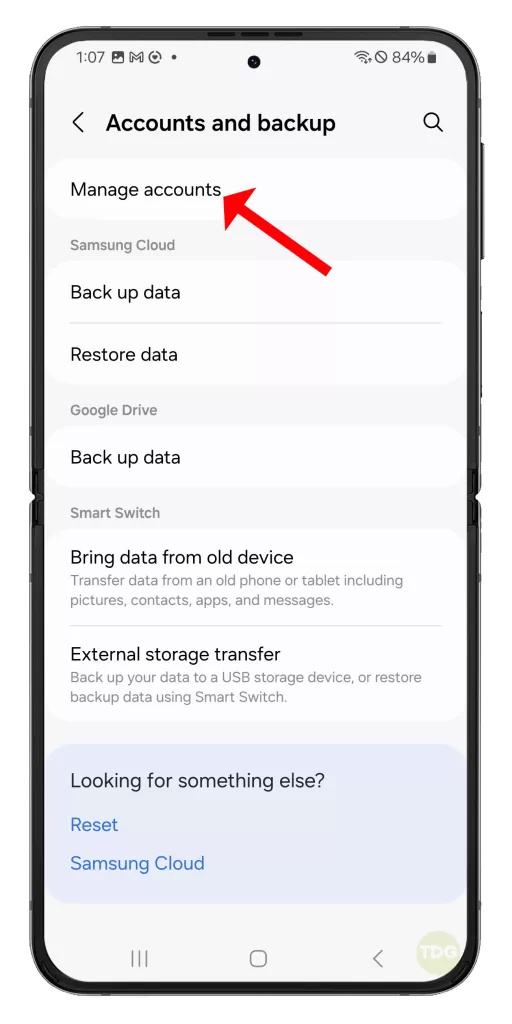
- Tap Accounts and backup.
- Tap Manage accounts.
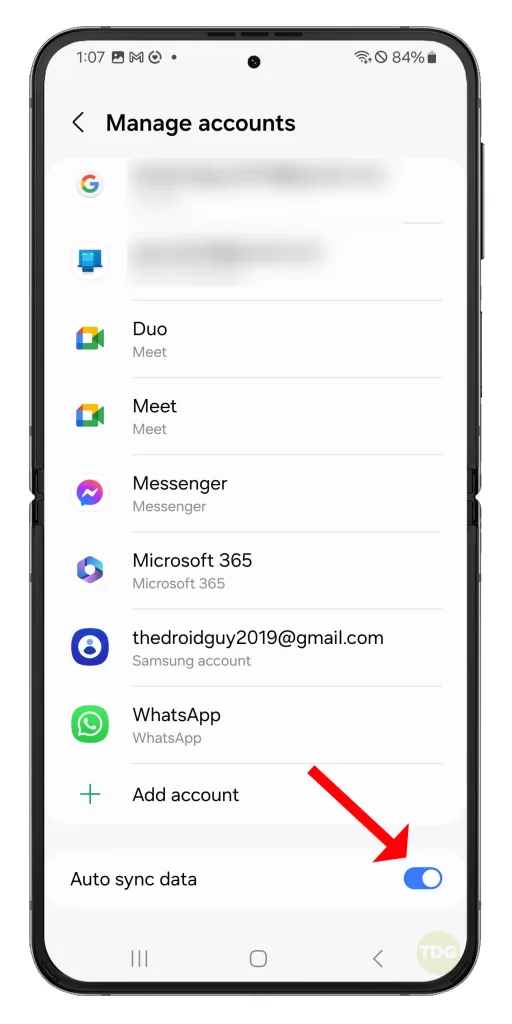
- Select each account and review its sync settings.
- For email accounts you check manually, disable background sync and check manually instead.
- Alternatively, open the Quick Settings panel, find the Auto sync tile, and toggle it off to pause all background sync at once.
Factory Reset as a Last Resort
If you’ve worked through all of the above steps and your Z Flip 5’s battery still drains unusually fast from the display — especially after ruling out hardware degradation — a factory reset is the final software-level fix. Corrupted system data, a poorly-behaving app that survived uninstall, or misconfigured background processes can all cause persistent drain that doesn’t respond to individual setting changes.
Before performing a factory reset, back up your data:
- Go to Settings → Accounts and backup → Back up data and back up to Samsung Cloud or Google.
- Alternatively, use Smart Switch to create a local backup on a PC or Mac.
To factory reset the Z Flip 5:
- Open Settings.
- Tap General management.
- Tap Reset.
- Tap Factory data reset.
- Read the warning, then tap Reset and confirm with your PIN.
After a factory reset, set up the phone without restoring a backup first. Use it for 24 hours to confirm the battery drain is resolved before restoring your data. If the drain persists even on a fresh install, the issue is hardware and Samsung service is the next step.