Best Dumb TVs That Leave Smart Features Behind
Let’s start with the honest part: a truly “dumb” TV — one with no operating system, no microphone, and no default Wi-Fi — is almost extinct in 2026 at mainstream sizes. Samsung, LG, Sony, TCL, Hisense, and Vizio have all stopped making consumer televisions without a smart platform. What’s left is a mix of three paths: small non-smart TVs from Westinghouse, Sceptre, Impecca, and Supersonic (mostly 32 inches and under); commercial digital signage displays like Samsung’s BE-series that ship without a consumer smart OS; and the “never connect it” workaround, where you buy a regular smart TV and skip the Wi-Fi setup so it behaves as a pure display.
| Product | Brand | Name | Price |
|---|---|---|---|
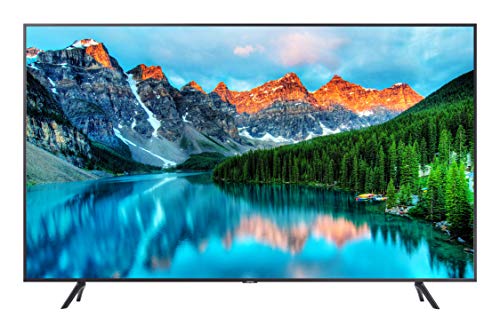 | Samsung | Samsung 4K Pro TV | Check Price on Amazon |
 | Impecca | 43-inch LED TV | Check Price on Amazon |
 | Westinghouse | Westinghouse 32-inch TV | Check Price on Amazon |
 | Westinghouse | Westinghouse 32-inch TV | Check Price on Amazon |
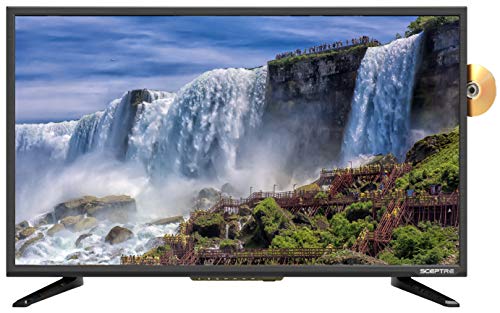 | Sceptre | Sceptre 32-inch TV with DVD Player | Check Price on Amazon |
 | Supersonic | Supersonic 19-Inch LED TV | Check Price on Amazon |
* If you buy through links on our site, we may earn an affiliate commission. For more details, please visit our Privacy policy page.
If you want a big-screen dumb TV in 2026, option two or three is almost always the right answer. If you only need a small dumb TV for a kitchen, bedroom, garage, or RV, option one still has real picks. This guide walks through each path with real 2026 products, current prices, the honest trade-offs, and where each model actually holds up.
At a Glance: Top Dumb TV Picks for 2026
| Model | Size | Approx. Price | Best For |
|---|---|---|---|
| Samsung BE55T-H Pro | 55″ | $650 | Big-screen dumb TV (commercial signage) |
| Impecca 43″ Frameless LED | 43″ | $300 | Medium living-room dumb TV |
| Westinghouse 32″ HD Non-Smart | 32″ | $140 | Kitchen, bedroom, garage |
| Westinghouse 32″ TV with Built-In DVD | 32″ | $180 | Kids’ rooms and RVs |
| Sceptre 32″ TV-DVD Combo (1080p) | 32″ | $150 | Budget 1080p with DVD |
| Supersonic SC-1911 | 19″ | $110 | 12V, RVs, tiny spaces |
Prices reflect typical 2026 Amazon listings and fluctuate. Always spot-check before buying — some models go out of stock and get replaced by quiet successors.
Why Choose a Dumb TV in 2026
The case for a dumb TV in 2026 is stronger than it was even two years ago. Smart TVs from the major brands now run automatic content recognition by default, which samples what’s on screen and ships viewing data back to the manufacturer for ad targeting. Vizio’s ACR system (Inscape) and Samsung’s Tizen analytics are the most widely documented examples, and both are enabled at first-time setup unless you dig through several nested menus to turn them off.
Beyond privacy, a dumb TV is simply more reliable as a display. Smart platforms push firmware updates that slow older sets down, drop app support, and occasionally inject a home-screen ad banner. A dumb TV — or a smart TV that never sees Wi-Fi — boots to input, holds its picture settings, and keeps working the same way in 2030 as it did on day one.
The trade-off is cost per inch. Manufacturers subsidize smart TVs with ad revenue, so a 55-inch smart TV from TCL or Hisense often costs less than a 43-inch dumb TV of similar panel quality. If budget is the deciding factor and you’re willing to run the “never connect it” setup described below, that route usually wins on price.
Best Premium Dumb TV: Samsung 55-Inch BE55T-H Pro TV
Approx. price: $650 | Panel: 4K UHD LED, 60Hz | Inputs: 2× HDMI, USB, RF | Category: Commercial signage
The BE55T-H is technically a commercial digital signage display, not a consumer TV, which is exactly why it works here. It ships with Samsung’s business firmware — no Tizen smart hub, no Samsung TV Plus, no Bixby microphone, no first-run setup wizard pushing you through a Samsung account. Plug an HDMI source in and it displays. That’s the entire user experience.
Picture quality is real 4K with adequate brightness for a living room (around 250 nits, not HDR-class), color is calibrated close to Rec. 709 out of the box, and input lag is low enough for casual gaming. What you give up is the premium TV stuff: no local dimming, no 120Hz, no HDMI 2.1, and the built-in speakers are thin signage-grade drivers that you’ll almost certainly want to replace with a soundbar.
Pros: True dumb big-screen option, commercial-grade reliability, 3-year business warranty from Samsung, no smart OS whatsoever.
Cons: Expensive per inch, no HDR, weak speakers, stock comes and goes from B2B suppliers.
Best 43-Inch Dumb TV: Impecca 43″ Frameless LED
Approx. price: $300 | Panel: 1080p LED, 60Hz | Inputs: 3× HDMI, USB, VGA, RF | Category: Consumer non-smart
Impecca is one of the few brands still shipping a mid-size consumer TV without a smart OS. The 43-inch frameless model is a 1080p set aimed at offices, break rooms, and second-room living spaces where 4K is a nice-to-have, not a requirement. At typical viewing distance of 6–8 feet, 1080p on a 43-inch panel still looks fine for cable, OTA, streaming boxes, and Blu-ray.
The feature set is deliberately plain: HDMI, USB media playback (JPEG, MP3, MP4), a VGA input for PC use, and a coaxial tuner for over-the-air antennas. No Wi-Fi, no Bluetooth, no voice remote.
Pros: True non-smart design, three HDMI ports, VGA input for desktop use, lightweight frameless chassis.
Cons: 1080p only at 43″, middling brightness in bright rooms, remote is basic plastic.
Best Small Dumb TV: Westinghouse 32″ HD Non-Smart
Approx. price: $140 | Panel: 720p LED, 60Hz | Inputs: 2× HDMI, USB, RF | Category: Consumer non-smart
This is the default pick for a kitchen TV, a workbench TV, a bedroom TV for an older family member, or any space where 32 inches of 720p is enough. Westinghouse explicitly markets this model as non-smart with built-in parental controls, and it ships with no network hardware at all. It’s also legitimately inexpensive — street price hovers around $140 and it has been essentially unchanged for three model years.
Pros: Cheap, reliable, simple remote, parental control lock, no network hardware to worry about.
Cons: 720p (not 1080p), weak speakers, no Bluetooth audio output for wireless headphones.
Best for Kids and RVs: Westinghouse 32″ TV with Built-In DVD
Approx. price: $180 | Panel: 720p LED, 60Hz | Inputs: 2× HDMI, USB, RF, built-in DVD | Category: Consumer non-smart
Same 720p panel as the standard Westinghouse 32″, but with a slot-loading DVD drive on the side. That makes it a genuinely useful pick for three audiences: parents who want a kid’s room TV that only plays DVDs the parents control, RV owners who don’t want to run streaming on cellular data, and anyone with a shelf of discs they’d rather not replace with digital copies.
Pros: All-in-one DVD + TV, no streaming required, 12V adapter available separately for RV use.
Cons: Still 720p, mono DVD audio, drive is slot-load (more fragile than tray-load long-term).
Best 1080p Budget Dumb TV: Sceptre 32″ TV-DVD Combo
Approx. price: $150 | Panel: 1080p LED, 60Hz | Inputs: 2× HDMI, USB, RF, built-in DVD | Category: Consumer non-smart
The Sceptre 32″ combo hits the same use case as the DVD Westinghouse but at 1080p instead of 720p, and usually at a slightly lower price. Sceptre’s build quality is more variable than Westinghouse — some Amazon reviews call out DOA units — but the brand does honor its one-year warranty if you file within 30 days of purchase.
Pros: 1080p at the 32″ DVD-combo price, multiple HDMI inputs, stands up to daily use.
Cons: Mixed QC, no Bluetooth, no 12V option from the factory.
Best for RV / 12V / Tiny Spaces: Supersonic SC-1911 19″
Approx. price: $110 | Panel: 720p LED, 60Hz | Inputs: HDMI, USB, VGA, AV, RF, built-in DVD | Category: 12V-capable non-smart
The SC-1911 is the TV RV owners, truckers, and off-grid tiny-house users keep coming back to. It runs on a standard 110V AC adapter for home use, but the bundled 12V car adapter lets it plug directly into a cigarette lighter or a 12V battery — no inverter needed. It also has legacy AV jacks for older game consoles (NES, SNES, Genesis) and a full-size DVD tray rather than a slot drive.
Pros: 12V compatible out of the box, AV legacy inputs, DVD tray, under $120 almost always.
Cons: Only 19 inches, 720p, build is plasticky but durable enough for vehicle use.
The “Never Connect It” Approach
For any TV 50 inches or larger, the most practical dumb-TV path in 2026 is to buy a current-year smart TV and simply never connect it to a network. Every major smart TV will boot and function normally without Wi-Fi — you’ll get a persistent “no network” badge on the home screen, but HDMI inputs work, picture settings save, and over-the-air tuning still works.
Three practical tips for this setup. First, skip the initial “connect to network” step by choosing “skip” or disconnecting from Wi-Fi during first-run setup. Second, go into Settings and disable any “automatic content recognition,” “viewing information services,” or “Smart Hub” analytics toggles you can find — their names vary by brand. Third, block the TV at your router using its MAC address or a separate IoT VLAN, so even if someone taps the wrong button on the remote, the TV can’t phone home.
This is the only way to get an OLED or a 120Hz Mini-LED TV without a smart platform in 2026, since no manufacturer ships those panels in a non-smart SKU.
Alternatives to a Dedicated Dumb TV
A large PC monitor is the cleanest alternative. A 43-inch 4K monitor from LG, ViewSonic, or Asus has no smart OS by design, no speakers to speak of, and multiple HDMI inputs. Expect to pay $350–$500 for the 43-inch size, plus a soundbar. Gaming-oriented monitors also add HDMI 2.1, 120Hz, and variable refresh rate, which no consumer dumb TV offers.
Short-throw projectors are a second option, especially for occasional movie viewing. A current-gen Epson or BenQ short-throw projector with HDMI inputs has no smart OS on the business models, and image quality at 100 inches rivals an entry-level TV if you control ambient light.
Finally, commercial-grade signage displays from NEC, LG Commercial, and Sharp exist up to 98 inches. They cost 2–3× what a consumer TV of the same size does, but they’re the only way to get a true dumb display in the 65-inch-plus range without the “never connect it” workaround.
Where Dumb TVs Actually Come From Now
Most of the non-smart TVs on Amazon today come from a shrinking list of second-tier brands that source panels from BOE, CSOT, or HKC and assemble in Mexico or Vietnam. Westinghouse (now owned by CORE Innovations) and Sceptre are the two biggest names in the consumer dumb-TV space. Impecca is smaller but still active. Supersonic sticks to the 12V / car / marine niche. Insignia and Element — once common for small dumb TVs — have shifted entirely to smart models under the Best Buy and Fire TV ecosystems.
Expect that specific models in this guide may be discontinued on six months’ notice and replaced by a near-identical successor with a different model number. The short list above is a snapshot as of 2026; always double-check current stock and the seller rating before buying.
Setting Up Your Dumb TV
Dumb TV setup is mercifully simple. Plug it in, connect your source (cable box, antenna, Blu-ray player, streaming stick if you want to add smart features externally, or a game console), and run the one-time input scan if you’re using the built-in tuner. For antenna users, ATSC 1.0 channels still work on these TVs — ATSC 3.0 tuners are not standard on non-smart sets, so if you want NextGen TV reception, you’ll need an external ATSC 3.0 tuner box.
Two setup details that save frustration later: run an HDMI cable to the far input (often HDMI 2 or 3) and leave HDMI 1 for whatever gets unplugged most often, and label the inputs from the TV’s own settings menu — most dumb TVs let you rename HDMI 1 to “Roku” or “Cable Box” so the input list makes sense a year later.
Honest Bottom Line
If your primary goal is privacy and simplicity at a big-screen size, buy a current smart TV from any brand, skip the Wi-Fi setup, and disable ACR — that’s the best picture per dollar in 2026 and it functions identically to a dumb TV in day-to-day use. If you want a purpose-built non-smart set, the Samsung BE55T-H is the only solid 55-inch option and is worth the premium if you value warranty and firmware stability. For small rooms, the Westinghouse 32-inch line and the Supersonic SC-1911 are reliable, cheap, and will keep working long after most smart TVs have stopped getting app updates.
Whichever path you pick, spot-check Amazon stock before ordering — dumb-TV inventory is thin and rotating, and the model you see today may be a different SKU next quarter.
Mình đánh giá 188v link khá cao vì giao diện đẹp và hỗ trợ nhiều trò chơi giải trí khác nhau. TONY06-29
Sau khi dùng thử nhà cái xn88 , mình cảm thấy khá hài lòng với trải nghiệm tổng thể. TONY06-29
Need a dumb TV for my hubby.i own a smart TV but my hubby who has dementia keeps accepting free icons.Can u get enough channels with a dumb tv.
I agree I have been searching for a non-smart standard TV I hope manufacturers get wise and start offering more affordable quality options
Most smart TVs spy on you for targeted advertizing and data mining and are always putting out a lot wireless radiation that cannot be turned off unless it is plugged into a router. Smart TVs are a major privacy and health risk for many.