Google rolls out major updates to Messages for web and cross-platform RCS texting
Google is rolling out a significant update to its messaging ecosystem that reshapes how people text across phones, computers, and even platforms. The changes center on Messages for web, Google Fi integration, and the long-anticipated expansion of RCS messaging between Android and iPhone users. Together, these updates mark a clear turning point in Google’s effort to modernize standard texting and close the feature gap with dedicated chat apps.
At the heart of this shift is a move away from legacy SMS-style behavior and toward a richer, more consistent messaging experience powered by RCS. For users, that means better media quality, more reliable group chats, stronger privacy protections, and smoother transitions between devices.
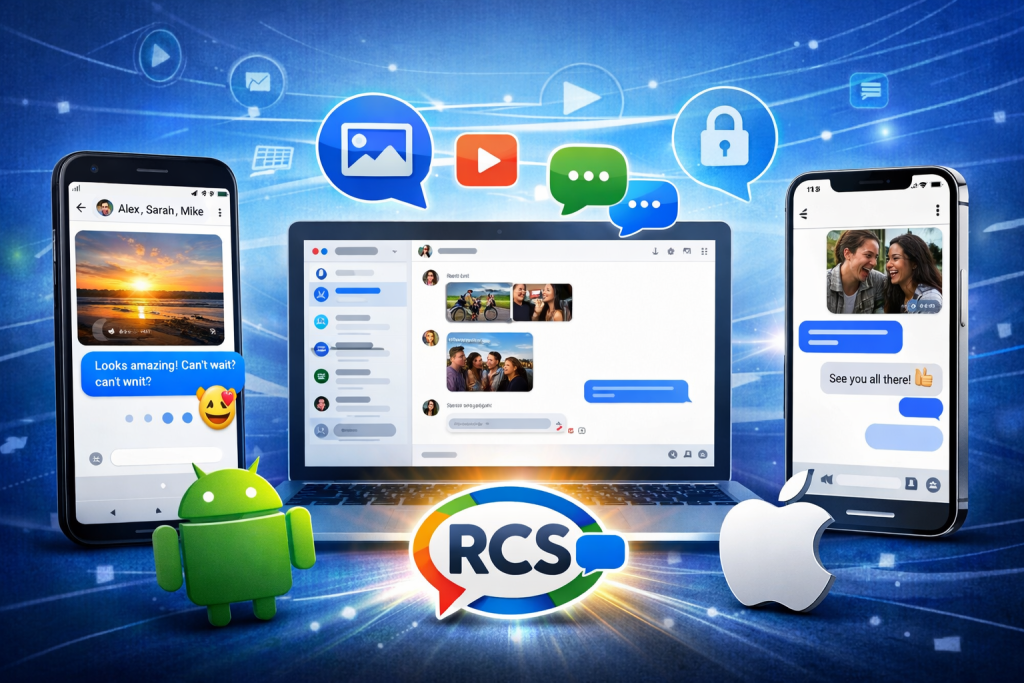
Messages for web transitions to a true RCS experience
Messages for web is undergoing an important backend change, particularly for users on Google Fi. Instead of relying on older sync methods that mirrored SMS conversations, the web interface is now aligning directly with RCS-powered chats.
This update allows Messages for web to behave much more like a modern messaging app rather than a basic inbox viewed in a browser. Photos and videos are shared in high quality without heavy compression. Group chats retain their structure and membership instead of breaking when participants change phones. Real-time features such as typing indicators and read receipts now appear consistently across devices.
For Google Fi users, there is a small setup change required. To start using the updated web experience, users need to open Google Messages on their phone, go to Messages settings, navigate to Advanced, then Google Fi Wireless, and turn off sync. In some cases, re-pairing the device with the web client may be required.
While messaging behavior is changing, core Fi features remain intact. Users can still place calls and manage voicemails through the web interface, preserving the convenience that Fi customers rely on.
RCS texting between Android and iPhone becomes a reality
One of the most impactful developments in this update is the expansion of RCS to conversations between Android and iPhone users. For years, cross-platform texting fell back to SMS or MMS, resulting in low-quality media, unreliable group chats, and a noticeably inferior experience compared to app-based messaging.
With RCS now supported across platforms, Android users can finally share high-resolution photos and videos with iPhone users without quality loss. Group chats become more stable and functional, and real-time indicators such as typing notifications begin to appear where supported.
While availability still depends on region and carrier, this change represents a major step toward reducing platform-based friction in everyday communication. For users accustomed to modern chat features, it removes one of the most obvious limitations of traditional texting.
Enabling RCS on Android is straightforward. Users simply open Google Messages, go to chat settings, and turn on RCS chats. Once enabled, compatible conversations automatically upgrade when both sides support the standard.
What defines the modern Google Messages experience
Google Messages has evolved far beyond being a default SMS app. Built around RCS, it now offers a feature set that feels closer to dedicated messaging platforms while maintaining the simplicity of phone-number-based communication.
Media sharing is one of the most noticeable improvements. Photos and videos are sent in their original quality, making everyday sharing practical instead of frustrating. Group chats are dynamic, allowing participants to be added or removed without breaking conversation threads.
The app also emphasizes expressiveness. Users can customize chat bubbles, apply reaction effects, and use screen effects to make conversations feel more personal. Selfie GIFs add a playful element, letting users record short animated clips directly from the camera with a brief countdown before sending.
These features are designed to enhance conversation without overwhelming it, giving users the option to keep things simple or add personality when they want.
Privacy, security, and spam protection
Security remains a central pillar of Google Messages. Conversations between Google Messages users are protected with end-to-end encryption, ensuring that message contents remain private and inaccessible to third parties.
Spam protection is another area where the app stands out. Google Messages actively filters suspicious texts, blocking many phishing attempts and scam messages before they ever reach the inbox. For users who rely on texting for everything from banking alerts to delivery updates, this protection has become increasingly important.
These safeguards work quietly in the background, reinforcing trust without requiring constant user intervention.
AI-powered messaging with Gemini
Google is also beginning to layer AI capabilities into Messages, powered by Gemini. These features are designed to assist rather than replace human communication.
AI tools can help users draft messages, refine wording, or respond more naturally in certain contexts. The goal is not automation, but subtle support that makes everyday communication smoother, especially in situations where wording matters.
While still evolving, these features signal where messaging is headed: toward tools that adapt to users instead of forcing users to adapt to technology.
Seamless conversations across devices
A major advantage of the updated Google Messages ecosystem is its focus on continuity. Users can start a conversation on their phone, continue it on a laptop through Messages for web, and pick it back up later on a tablet without losing context.
This seamless experience reflects how people actually use technology today, switching devices throughout the day depending on location and task. By tying everything together through RCS rather than device-specific syncing, Google is reducing friction and improving reliability.
For Google Fi users in particular, this unified approach replaces older workarounds with a cleaner, more consistent system.
Availability and rollout considerations
As with most large-scale platform changes, the rollout is gradual. RCS availability can vary by region, carrier, and device, and some features may appear sooner for certain users than others.
Despite these variables, the direction is clear. Google is consolidating its messaging strategy around RCS, minimizing reliance on SMS, and pushing toward a single, modern standard that works across phones, computers, and platforms.
Why this update matters
Text messaging is one of the most basic smartphone functions, yet it has lagged behind modern apps for years due to fragmentation and outdated standards. By expanding RCS across Android, iPhone, and the web, Google is addressing that gap without forcing users to change apps or habits.
For Google Fi users, the updated Messages for web experience delivers long-awaited consistency. For Android users texting iPhone friends, it removes one of the most visible limitations of cross-platform communication. And for Google Messages as a whole, it reinforces the app’s position as a serious, modern messaging platform built around rich features, privacy, and seamless device integration.
As these changes continue to roll out, everyday texting is set to become clearer, more expressive, and far closer to what users expect from modern digital communication.